Why do you need to know this?
July 2026 – Just this weekend I was running a first-aid course for canoeists and one participant was missing. He’d picked up a tick at a campsite in Scotland and a few days later was displaying the classic bruise. But…despite living in Cumbria where ticks are commonplace he’d had to argue with his GP to receive antibiotics!
Just because we might know and recognise a tick bite and the subsequent potential for it to turn into something much worse doesn’t mean the people we take out into nature will – or as this anecdote so well demonstrated 0 the health care professionals we go to for help.
Whats the risk?
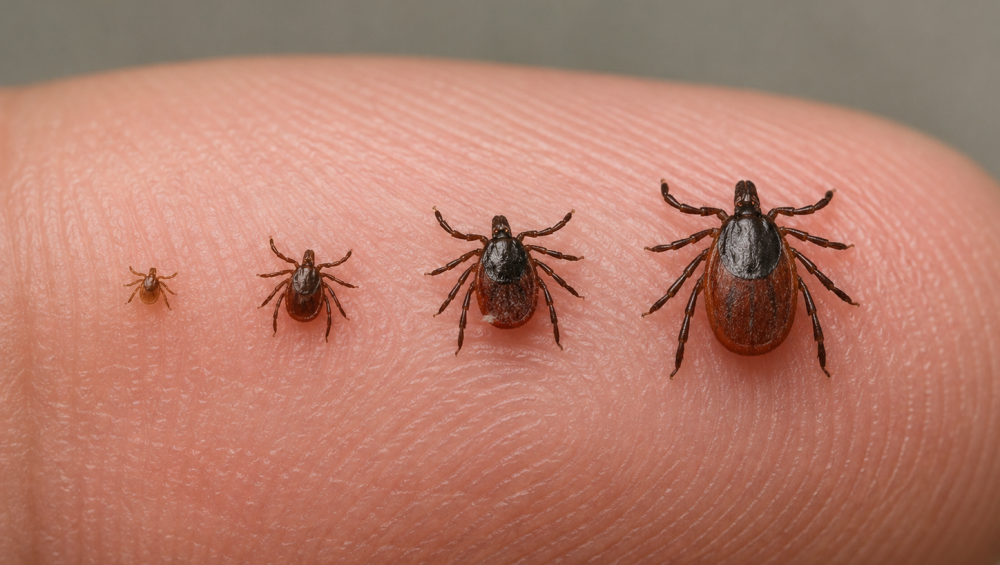
Ticks are a real issue for UK outdoor enthusiasts because they are increasingly common in long grass, bracken, woodland, moorland and even some popular lowland walking areas, and although many bites cause no harm, some can transmit infections such as Lyme disease, tick-borne encephalitis & certain Rickettsia infections.
Lyme disease is the one most people need to know about, because if it is missed it can lead to more serious problems including flu-like illness, extreme fatigue, nerve pain, joint problems and ongoing health complications, whereas when it is recognised early it can usually be treated effectively with antibiotics.
The difficulty is that tick bites are often painless, many people never notice the tick, and the classic bullseye rash does not appear in every case, so walkers, runners, campers and dog owners all need a basic awareness of prevention, prompt tick removal and the need to monitor for symptoms after a bite. It’s also worth considering that if your four-legged friend isn’t medicated against ticks then they can pass from pooch to you.
Put simply, if you spend time outdoors in the UK, understanding ticks is now part of looking after your health in the same way that checking the weather or carrying the right kit is.
Signs & Symptoms
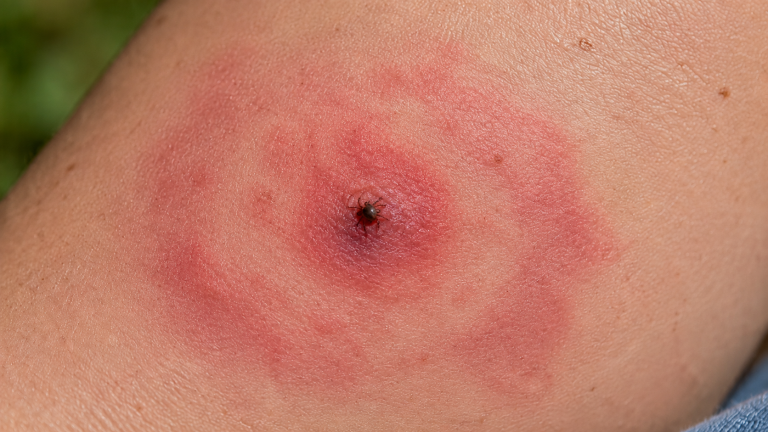
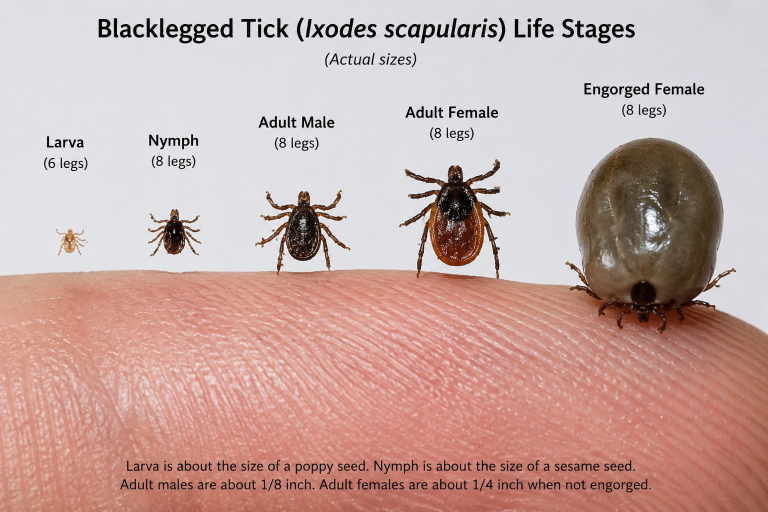
A tick bite is often painless, and the tick may be so small that it goes unnoticed. Immediately after removal, there may be a small area of redness, irritation or swelling around the bite. This local reaction is common and does not necessarily mean that Lyme disease has been transmitted, particularly if it begins to fade within a day or two.
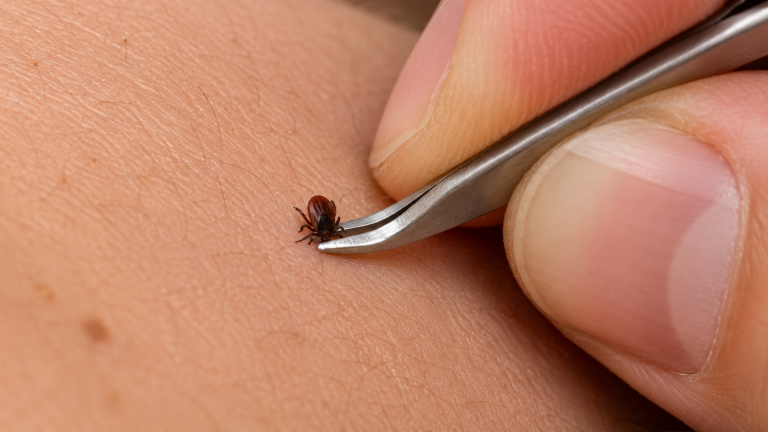
When you get home…Check yourself carefully, ticks can be tiny & are often easier felt than seem. They like moist soft skin – the back of knees, easy access places like calves – but I’ve also taken them off hands and a persons face.
Over the following days or weeks, watch for:
• a rash that gradually expands away from the bite
• a circular or oval red, pink, purple or bluish-red patch
• an area of central clearing, although the rash does not always form a classic “bullseye”
• fever, chills or sweats
• unusual tiredness or fatigue
• headache, neck pain or stiffness
• aching muscles or joints
• swollen glands
The characteristic Lyme disease rash is called erythema migrans. It is generally not hot, painful or itchy and may appear between three days and three months after the bite, although it most commonly develops within one to four weeks. Not everyone develops or notices a rash, so flu-like illness or other unexplained symptoms following possible tick exposure should not be ignored.
If Lyme disease is not recognised and treated, less common later symptoms can include facial weakness or drooping, shooting nerve pain, numbness or tingling, joint swelling and, rarely, problems affecting the heart or nervous system. Anyone who develops a spreading rash or becomes unwell after a suspected tick bite should seek medical advice and mention the possibility of tick exposure.
updated NICE Guidance
The National Institute for Health & Care Excellence (NICE) have updated their guidance for healthcare professionals in relation to the diagnosis and treatment of Lymes disease.
The NICE guidance though aimed at professionals is highly encouraging for several reasons; it means more doctors will be aware of, and encouraged to look for, lyme disease – as prompt anti-biotic treatment (Oral doxycycline) can make a significant difference to what, left unchecked, can be an illness with long lasting painful and debilitating symptoms.
A highlight for us when reviewing the new guidelines was the inclusion of a graphic showing the various forms that erythema migrans (the infamous tick rash) can take. Most readers will know about the bullseye bruise – but as EM is only present in approximately 2/3rds of cases & 64% of people diagnosed with Lyme Disease don’t recall being bitten by a tick then this tool could really help in early recognition
Types of Erythema Migrans – link
The good news...
If all of that sounds a bit daunting (and all too often the outdoor world if full of horror stories) then it’s also worth remembering:
- If you cover up well then you’re unlikely to get bitten
- Lyme disease is a bacterial infection treated with antibiotics
- most people recover completely
- prompt antibiotic treatment reduces the risk of further symptoms developing and increases the chance of complete recovery
- it may take time to get better, but their symptoms should continue to improve in the months after antibiotic treatment
- they may need additional treatment for symptom relief.
Sharing is caring!